
The Supervisory Leadership Shift
What Organizations Need to Know About Leading Hybrid, Multicultural Teams in 2026

The supervisor who led through authority 10 years ago is obsolete. Today's frontline leader navigates hybrid teams, cultural complexity, and constant change, all while building psychological safety and discretionary effort. New research reveals what's working, what's failing, and why positive psychology-based development is becoming the competitive differentiator for Malaysian companies."
The Strategic Imperative
The supervisor who led through authority a decade ago is obsolete. Today's frontline leader navigates hybrid teams, cultural complexity, and constant change, requiring emotional intelligence, systems thinking, and authentic presence. Yet Malaysian organizations continue investing in two-day workshops teaching checklists and templates, while 68% of supervisors report feeling unprepared for people management¹. This gap between what supervisors need and what organizations provide represents a critical competitive vulnerability.
The Crisis: Why Supervisory Development Matters
Malaysian organizations face a critical paradox: supervisors are promoted for technical competence yet fail in roles requiring interpersonal mastery. Research reveals that poor supervisory performance drives annual frontline turnover averaging 35% in manufacturing and services², with replacement costs reaching 50-200% of annual salary per position³.
Unlike senior leaders with access to executive coaching, supervisors, the organization's largest management cohort receives minimal strategic investment⁴. This represents not just a people problem. It's a business problem. Supervisors drive 60-70% of frontline engagement variation⁵, directly impacting retention, productivity, and innovation.
The question organizational leaders face is not whether supervisory development matters. Research has settled that. The question is whether organizations will invest strategically in approaches proven to work or continue settling for commodity training that creates an illusion of change without transformation.
What's Changed: Three Defining Pressures Supervisors Face Today
Malaysian supervisors manage teams spanning generational divides (Gen Z to Millennials), diverse cultural backgrounds, and competing work values yet traditional command-and-control approaches fail with this demographic⁶. Post-pandemic, they lead distributed teams without face-to-face presence, requiring fundamentally different capabilities to build trust and maintain engagement⁷. Simultaneously, digital transformation and organizational restructuring mean supervisors guide teams through constant uncertainty, demanding psychological resilience and adaptive thinking⁸.
Research confirms supervisors rank psychological safety, authentic communication, and change adaptability as their top three capability gaps⁹. These aren't nice-to-have soft skills. They're essential for navigating 2025 organizational realities.
What Future Leaders Actually Need
Tomorrow's supervisors require five essential capabilities that most organizations don't develop. First is emotional and cultural intelligence, the ability to read emotional undercurrents, adapt communication across cultural contexts, and build belonging in diverse teams¹⁰. Second is systems thinking: future supervisors must understand organizational interconnectedness, thinking strategically while executing operationally¹¹. Third is psychological safety architecture, the deliberate design of team environments where people feel safe speaking up, experimenting, and learning from failure¹². Fourth is digital fluency and change leadership, modeling comfort with ambiguity while guiding teams through disruption¹³. Fifth is authentic influence: command-and-control becomes counterproductive; future supervisors lead through trustworthiness, purpose alignment, and genuine care¹⁴.
These capabilities aren't taught in traditional supervisory training. They require different pedagogy, different facilitation, different accountability.
Why Traditional Training Fails
Most supervisory training teaches technique without addressing psychological and relational foundations¹⁵. Generic two-day workshops deliver conflict resolution steps, performance management processes, compliance frameworks addressing surface behaviors while ignoring the emotional triggers, relational dynamics, and psychological patterns that actually drive supervisory effectiveness¹⁶.
The typical trajectory is predictable: initial enthusiasm during the workshop, 87% knowledge loss within 30 days, reversion to old patterns within 60-90 days, minimal measurable impact¹⁷. Supervisors fail not because they don't know what to do. They fail because they lack the psychological resilience, emotional awareness, and relational capacity to be present when it matters most during change, conflict, or ambiguity¹⁸.
Effective supervisory development requires something fundamentally different: personalized assessment before design begins, 12-16 weeks of integrated learning combining structured workshops with coaching and peer accountability, real-time application to organizational challenges, organizational systems alignment to reinforce new behaviors, and rigorous impact measurement tracking engagement scores and retention rates not satisfaction ratings¹⁹. This integrated approach produces measurably different outcomes than commodity training²⁰.
Four Actions Organizational Leaders Should Take Now
First: Make Supervisory Development a Board-Level Strategic Priority
Elevate supervisory leadership from HR initiative to board agenda. Establish supervisory capability as a key performance metric alongside financial performance. Include supervisory engagement scores in quarterly board reporting. Link supervisor development investments to retention metrics and quantifiable cost savings. Set specific targets: reduce frontline turnover by X%, improve engagement scores by Y%, and achieve Z% in supervisory confidence metrics.
Allocate a dedicated budget for supervisory development, not lumped into general training budgets. Require senior leadership participation in supervisory development programs. This signals organizational commitment, ensures accountability, and attracts serious development investment.
Second: Redesign Development Programs Around Behavioral Change, Not Content Delivery
Move from two-day workshops to 12-16 week integrated programs. Conduct a pre-program assessment of supervisory capabilities across your cohort. Design programs with three distinct phases: Foundation (weeks 1-4), Application (weeks 5-10), Accountability (weeks 11-16).
Include monthly peer learning cohorts where supervisors apply frameworks and report results. Integrate executive coaching for supervisors navigating complex challenges. Require supervisors to complete real-world projects improving team engagement, leading organizational change, and building psychological safety. Measure impact through engagement surveys, retention rates, and team performance data.
This produces behavioral change that sticks, enabling supervisors to model new approaches consistently and creating sustainable frontline culture shifts.
Third: Develop Supervisors for Future Capabilities, Not Yesterday's Competencies
The supervisory leader of 2030 requires fundamentally different capabilities than supervisors of 2015²¹. Yet organizations still use outdated competency models, creating capability gaps that competitors exploit²².
Audit current supervisory development programs against future capability requirements: emotional intelligence, psychological safety creation, change leadership, and cultural agility. Identify gaps between current training and future needs. Redesign hiring criteria for supervisory roles to emphasize adaptive capacity and interpersonal capability, not just technical expertise. Weight supervisory promotion decisions on emotional intelligence and relationship capability, not technical task management. Create peer learning groups focused on emerging challenges: remote team management, cultural complexity, and rapid change navigation.
Organizations that proactively close this capability gap will attract and retain frontline talent that competitors lose.
Fourth: Partner with Specialists, Not Generalists
In an era where generic training content is readily available, differentiation no longer comes from what is taught. It comes from how development is designed, who facilitates it, and how accountability is structured²³. Generic approaches lack depth and cannot adapt to organizational complexity²⁴.
Evaluate development partners on expertise in supervisory leadership, track record of measurable impact, capability to customize to your organizational context, facilitation skills for building peer accountability, and measurement discipline. Ask prospective partners: "What percentage of your supervisors show sustained behavior change 12 months after training?" Watch for vague answers.
Define success metrics upfront: engagement score improvement, turnover reduction, team performance gains, and supervisory confidence metrics. Establish quarterly review meetings to assess impact against targets. Build in mid-program adjustments based on initial results. Conduct 90-day and 12-month post-program assessments to measure sustained impact.
This delivers measurable business impact and supervisors who sustain new behaviors long-term.
Why This Matters Now
Malaysian organizations implementing all four actions create supervisory leadership pipelines that attract and retain frontline talent in competitive labor markets²⁵, accelerate innovation through psychological safety and frontline engagement²⁶, navigate organizational change faster than competitors²⁷, and build coherent cultures that translate strategy into frontline reality²⁸.
Malaysia's competitive future depends not on executive suites but on frontlines, and frontlines are led by supervisors. Organizations that invest strategically in supervisory development through evidence-based, integrated approaches build resilient leadership pipelines capable of navigating tomorrow's complexity.
The supervisory leadership imperative is clear. The question is whether organizations will choose strategic investment in proven approaches or continue settling for commodity training that creates an illusion of change without transformation.
For organizations seeking to build supervisory leaders equipped to navigate complexity and drive engagement in Malaysia's evolving workplace.
Explore Supervisory Leadership Development
#SupervisoryLeadership #LeadershipDevelopment #MalaysianBusiness #EmployeeEngagement #PositivePsychology
Endnotes
-
Hays Malaysia. (2025). Malaysia's Top Ten Talent Trends for 2025. Hays Malaysia.
-
Australian Institute of Management. (2024). Leadership and Management Capability in Asia-Pacific. AIM Research.
-
Society for Human Resource Management. (2024). 2024 Job Satisfaction and Engagement Survey. SHRM.
-
Quarterdeck. (2025). Leadership Development Trends in Malaysia 2025. Quarterdeck.
-
Gallup. (2023). The Future of Engagement: Global Manager Report 2023. Gallup.
-
Hofstede, G., & Hofstede, G. J. (2005). Cultures and Organizations: Software of the Mind (2nd ed.). McGraw-Hill.
-
McKinsey & Company. (2024). The Future of Work: Five Trends Shaping the Workplace. McKinsey Global Institute.
-
Bennis, W. G., & Nanus, B. (2007). Leaders: Strategies for Taking Charge (2nd ed.). Harper Business.
-
Quarterdeck. (2025), op. cit.
-
Goleman, D., Boyatzis, R., & McKee, A. (2002). Primal Leadership: Realizing the Power of Emotional Intelligence. Harvard Business School Press.
-
Senge, P. M. (2006). The Fifth Discipline: The Art & Practice of The Learning Organization. Doubleday.
-
Edmondson, A. C. (1999). Psychological safety and learning behavior in work teams. Administrative Science Quarterly, 44(2), 350–383.
-
World Economic Forum. (2023). Future of Jobs Report 2023. WEF.
-
Cameron, K. S. (2012). Positive Leadership: Strategies for Extraordinary Performance. Berrett-Koehler Publishers.
-
Buckingham, M., & Goodall, A. (2015). Reinventing performance management. Harvard Business Review, 93(4), 40–50.
-
Edmondson, A. C., & Lei, Z. (2014). Psychological safety: The history, renaissance, and future of an interpersonal construct. Annual Review of Organizational Psychology and Organizational Behavior, 1, 23–43.
-
Brown, B. C. (1986). Learning how to learn. Training & Development Journal, 40(6), 40–46.
-
Fredrickson, B. L. (2009). Positivity: Groundbreaking Research Reveals How to Embrace the Hidden Strength of Positive Emotions. Crown Publishers.
-
Kirkpatrick, D. L., & Kirkpatrick, J. D. (2006). Evaluating Training Programs: The Four Levels (3rd ed.). Berrett-Koehler Publishers.
-
Merriam, S. B., & Bierema, L. L. (2013). Adult Learning: Linking Theory and Practice. Jossey-Bass.
-
World Economic Forum. (2023), op. cit.
-
Randstad Malaysia. (2025). Malaysia's Top HR and Talent Trends 2025. Randstad.
-
Kotter, J. P. (2012). Leading Change. Harvard Business Review Press.
-
Schein, E. H. (2010). Organizational Culture and Leadership (4th ed.). Jossey-Bass.
-
Dutton, J. E., & Heaphy, E. D. (2003). The power of high-quality connections. In K. S. Cameron, J. E. Dutton, & R. E. Quinn (Eds.), Positive Organizational Scholarship (pp. 263–278). Berrett-Koehler Publishers.
-
Edmondson, A. C. (1999), op. cit.
-
Fredrickson, B. L. (2009), op. cit.
-
Cameron, K. S., Dutton, J. E., & Quinn, R. E. (2003). Positive Organizational Scholarship: Foundations of a New Discipline. Berrett-Koehler Publishers.
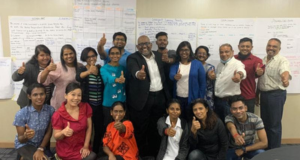
Manager Competencies For 2026
Mastering Paradox in Malaysia's Evolving Workplace
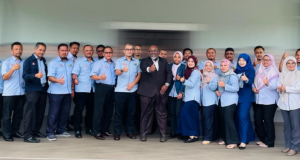
Positive Leadership - the New Competitive Advantage!
Why Senior Management Must Embrace this managerial competency .
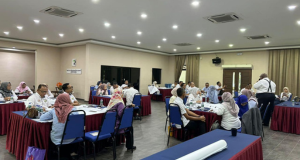
Developing New Leader Potential
Why do you need to focus on their Self-Awareness?